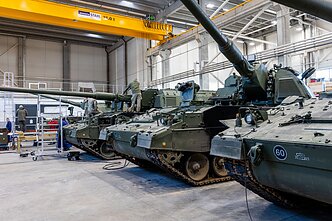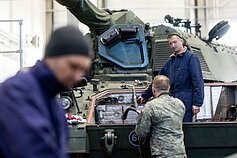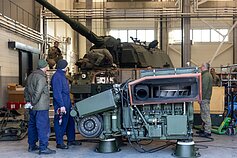















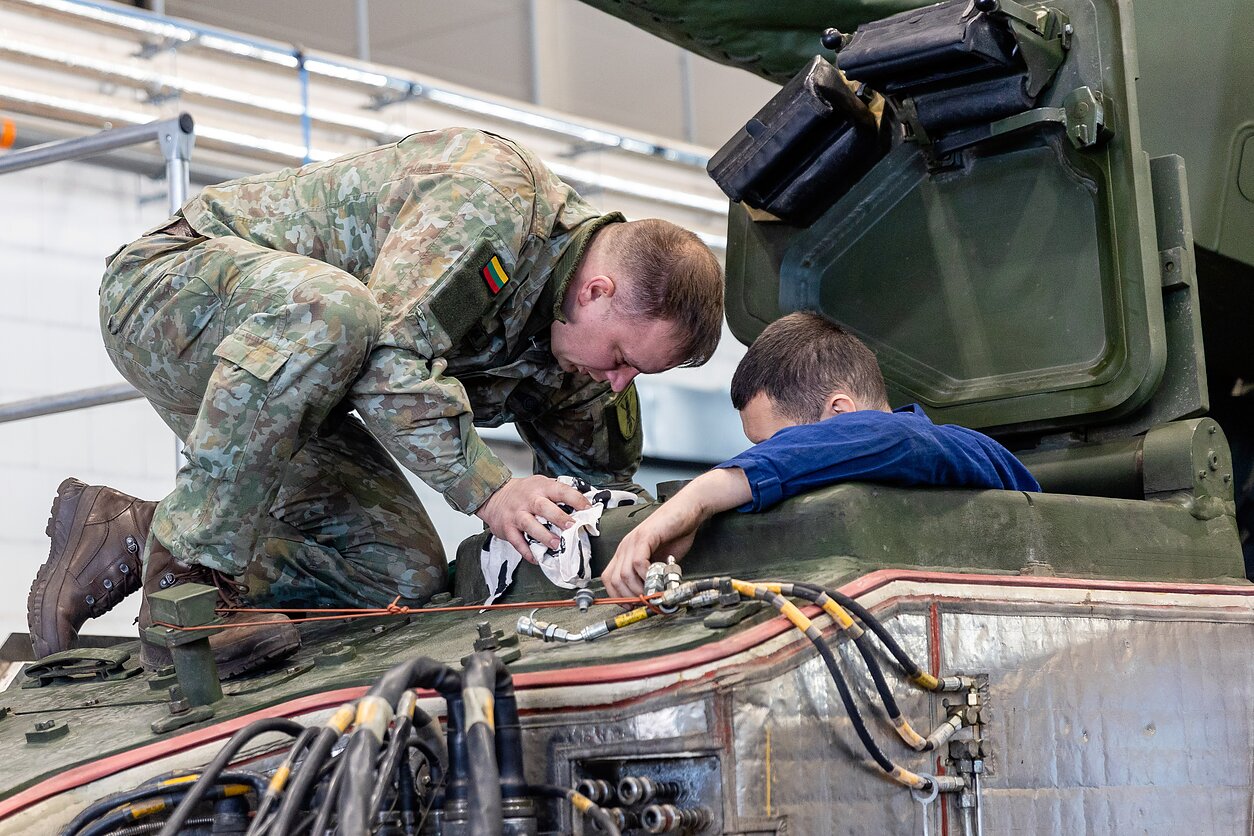
A 1,000-HP, 18.3-liter engine driving a 55-ton German self-propelled howitzer PzH 2000 is buzzing in a hangar in Lithuania’s Rukla.
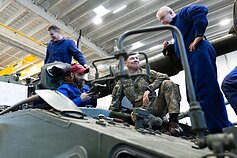
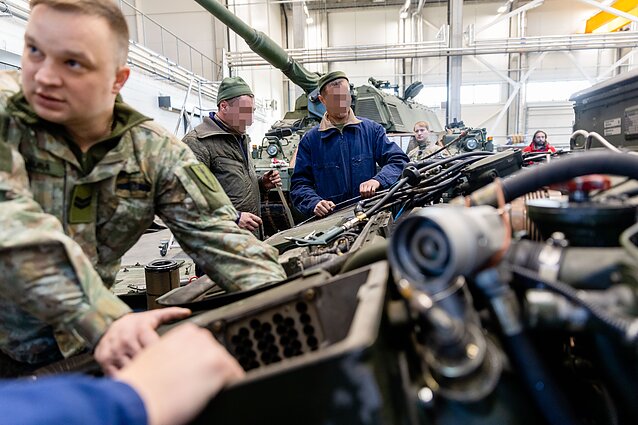
As the sound fills the hangar, many in the building, including 18 men in blue uniforms, stare back.
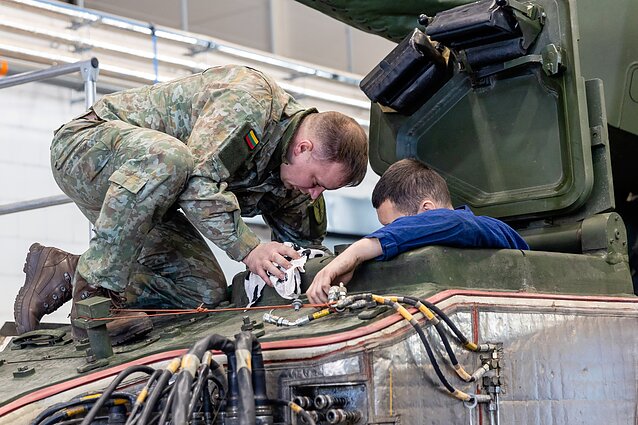
The latter are Ukrainian army mechanics who trained in Lithuania in December to repair such howitzers.
“This is the first group to undergo training in Lithuania on how to repair these howitzers,” Major Žilvinas Čerškus, chief of staff of the Lithuanian artillery battalion stationed in the central District of Jonava, told BNS.
On Friday, the group of Ukrainian troops is leaving Lithuania and going home.
Breakdowns from heavy use
Germany handed over a dozen PzH 2000s to Ukraine back in June. Experts say these artillery pieces, along with other Western weapons sent to Ukraine, have helped the Ukrainians to change the course of its war with Russia.
However, the heavy use of howitzers leads to rapid wear and tear. They are sent to NATO countries for repairs, including to Lithuania where six howitzers have been repaired so far.
“The goal is to train troops to identify problems and fix them on the battlefield in real time,” Čerškus said. “If I have the ability and the tools to repair it on the spot, which means I save time and resources, I can support manoeuvres in time and on the spot, rather than waiting until the repaired equipment comes back from abroad in a month or two.”
In Ukraine, PzH 2000s are used with an unprecedented level of intensity unseen by the German army.
In November, the German magazine Der Spiegel reported that the Ukrainian army was firing around 300 rounds a day from one gun.
The Ukrainian soldiers were trained in Rukla to perform howitzer maintenance, rather than repair broken parts.
Lithuanian troops who spoke to BNS on condition of anonymity said it was the lack of maintenance during the heavy use of artillery that led to howitzer failures in some cases.
The maintenance of howitzers in wartime conditions needs to be carried out much more frequently, even weekly in some cases.

Common enemy motivates
Ukrainian mechanics spent two weeks in Lithuania, studying instructions and learning how to service howitzer engines and chassis. They worked on four howitzers and learnt to work with different components.
Many of the Ukrainians who completed the course in Lithuania underwent prior training in Germany, and then they specialised in chassis or turret maintenance during their training in Lithuania. Four Ukrainians have completed their first training to repair howitzers.
Lithuania has been using PzH 2000s since 2016, and now Lithuanian troops have shared their practical knowledge with Ukrainian counterparts, Čerškus said.
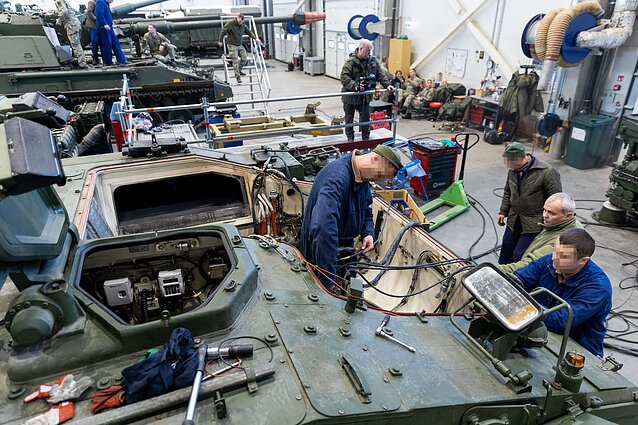
“They gained more theoretical knowledge elsewhere, but we taught them about faults that are not described in the books we have learnt from our experience operating the equipment,” the officer said.
The Ukrainians also shared information from the front line about howitzers’ problematic parts, Čerškus said.
During prior courses, Lithuania provided training to Ukraine’s special forces, bomb disposal and demining units. Ukrainian troops were also trained to operate in environments with chemical, biological, radiological, and nuclear contamination, combat unmanned aerial vehicles, and gather intelligence from open sources.
In total, Lithuania has provided training for 500 Ukrainian troops so far this year and plans to triple this number next year.
For security reasons, BNS was not allowed to speak to the Ukrainian troops for this report.
Troops from the General Romualdas Giedraitis Artillery Battalion willingly agreed to help the Ukrainians, Čerškus said.
“If the Ukrainians needed more time, our troops were willing to work with them after working hours,” Čerškus said. “A common enemy motivates.”

Newsletter
Every Friday morning.